Different organizations have different priorities. Some are focused on modernization, others on data, resilience, expansion, or operational efficiency.

The use cases below outline common challenges and the approaches organizations take to address them.


Situations we see most often

  • Core modernization projects estimated at 18–36 months
  • New integrations require extensive testing and customization
  • Transformation initiatives compete with day-to-day operations
  • Teams avoid change because of operational risk

What BKN301 provides

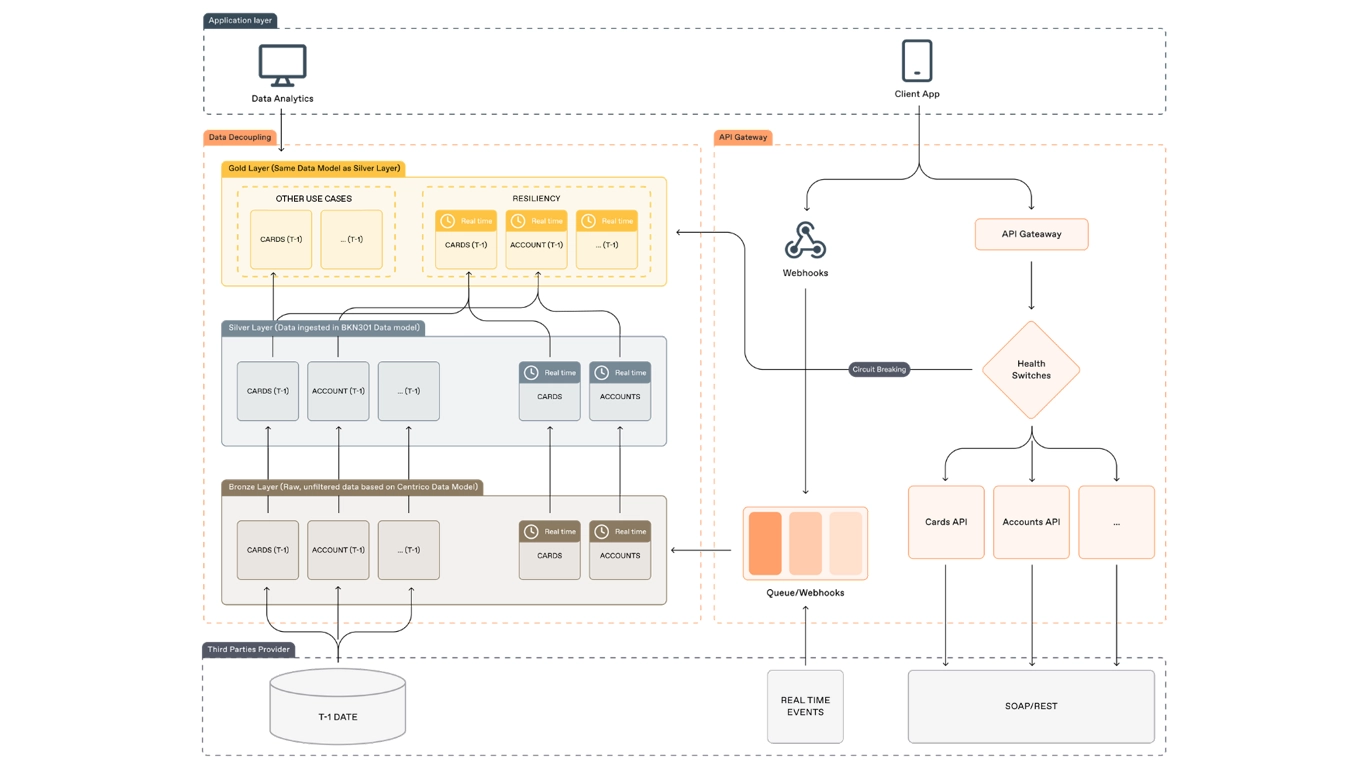
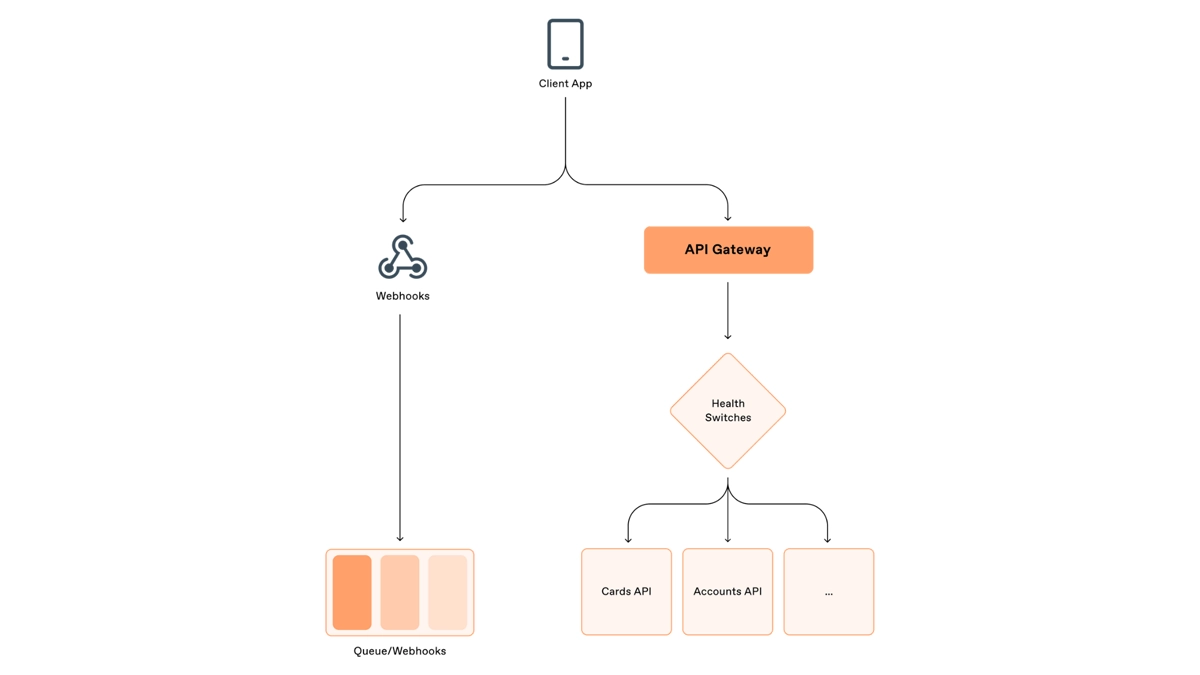
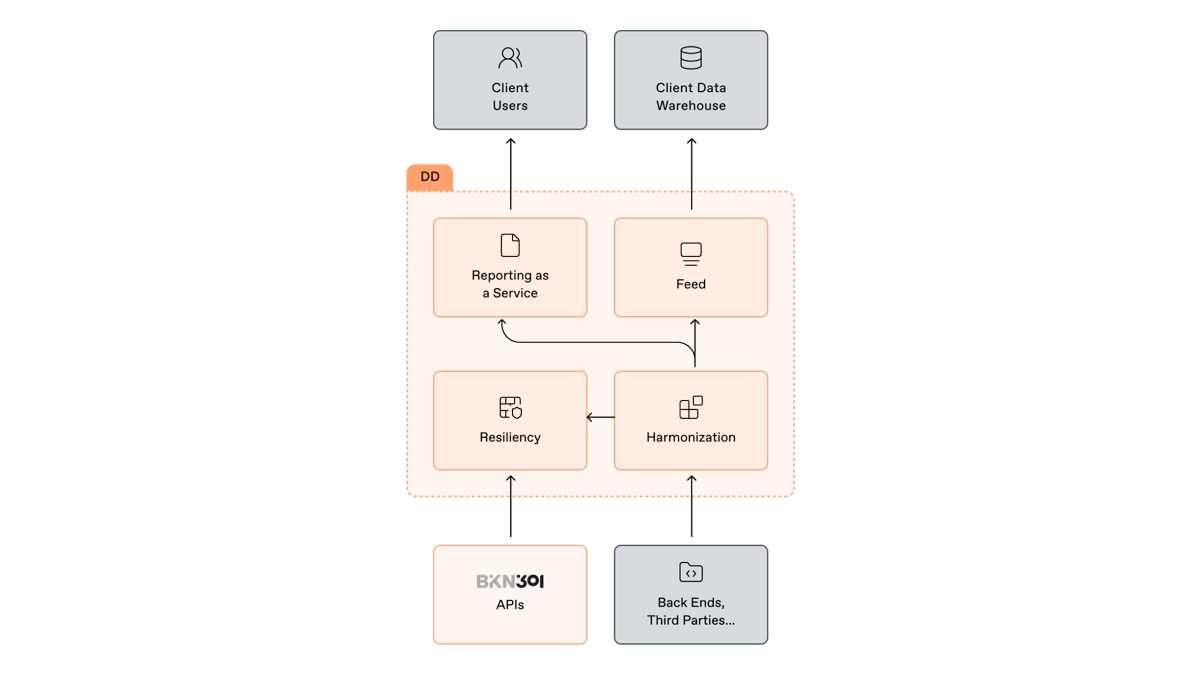
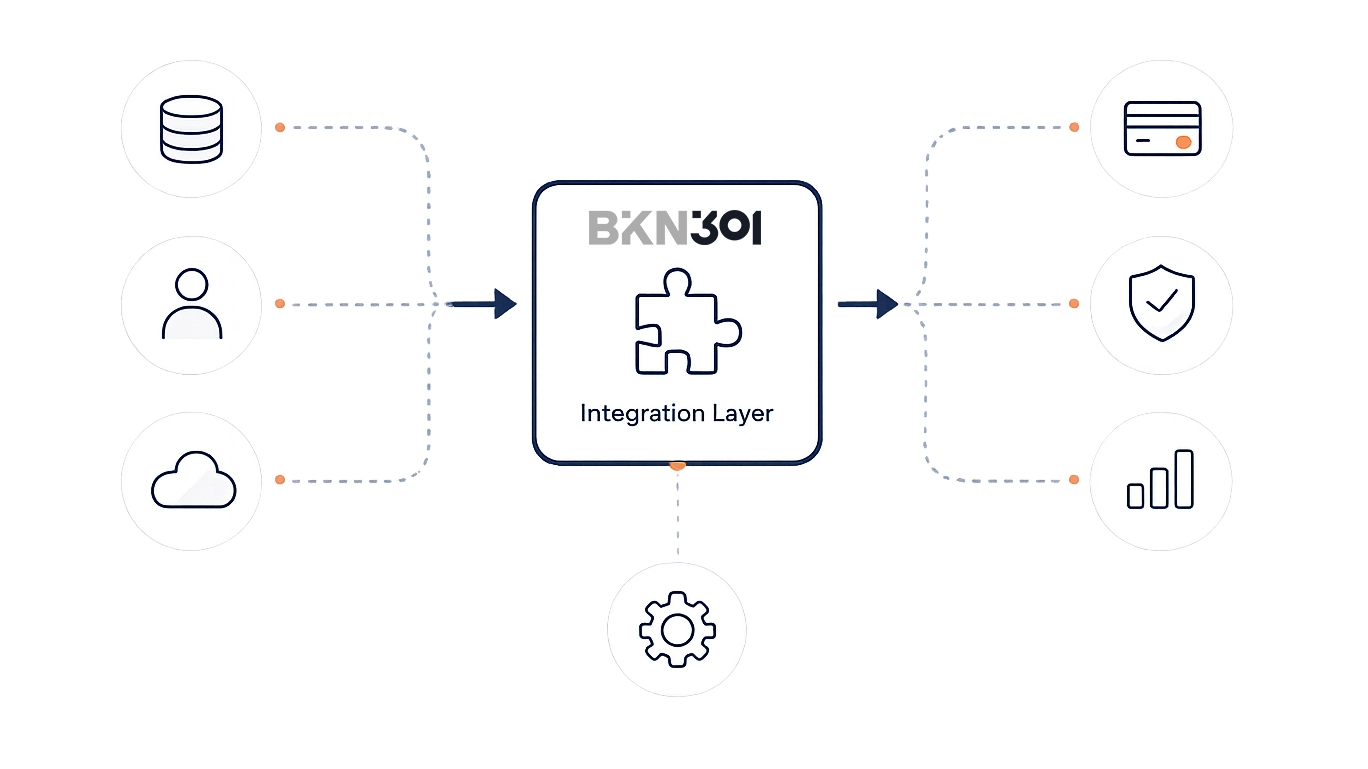
A decoupled architecture that allows organizations to modernize incrementally, introduce new capabilities, and migrate systems while keeping production stable.

Business outcome

  • Up to 70% faster transformation initiatives
  • Migration timelines reduced from 18–36 months to 6–9 months
  • More than 30% reduction in change-related costs

up to 40%

savings in integration and maintenance costs

up to 100%

data accuracy with faster reporting and trusted insights

Situations we see most often

  • Core systems are limiting innovation
  • New projects require complex integrations
  • Technology teams are balancing modernization with daily operations
  • Large transformation programs are considered too risky

What BKN301 provides

A flexible architecture that allows organizations to modernize incrementally while maintaining existing operations and customer experiences.

Business outcome

  • Up to 70% faster reporting cycles
  • Reporting preparation reduced by 40–70%
  • AI innovation cycles accelerated from 9 months to 9 weeks

Situations we see most often

  • Expansion requires new providers and integrations in every market
  • Regulatory requirements differ across countries
  • Operational complexity grows faster than revenue
  • Market launches take years instead of months

What BKN301 provides

A scalable operating model that connects providers, partners, and compliance frameworks across markets through a unified infrastructure.

Business outcome

  • Simplified multi-country operations
  • Reduced compliance effort across markets
  • Lower expansion costs through aggregated scale
  • Consistent operations across geographies

scale globally

while maintaining local relevance

0 downtimeΒ 

provider transitions

Situations we see most often

  • Provider migrations create service disruption risks
  • System outages increase customer complaints
  • Incident communication is fragmented
  • Vendor dependency limits flexibility

What BKN301 provides

A resilient operating foundation that maintains service continuity, supports vendor transitions, and protects customer experience during change.

Business outcome

  • Up to 40% fewer customer complaints
  • Up to 40% fewer complaint tickets
  • Continuous customer access during backend disruptions

Situations we see most often

  • Credit decisions slowed by manual reviews and fragmented data
  • Customer onboarding takes days instead of minutes
  • Teams switch between systems to find answers
  • Reports are built manually every time they’re needed

What BKN301 provides

A unified decisioning and data foundation that brings together customer, operational, and risk information in real time, enabling faster decisions, streamlined onboarding, and reporting on demand.

Business outcome

  • Credit and risk decisions in seconds
  • Customer onboarding in minutes
  • Reports available on demand

from months to minutes

remove bottlenecks across the customer journey

reduce operational overhead

spend less effort on administration and manual processes

Situations we see most often

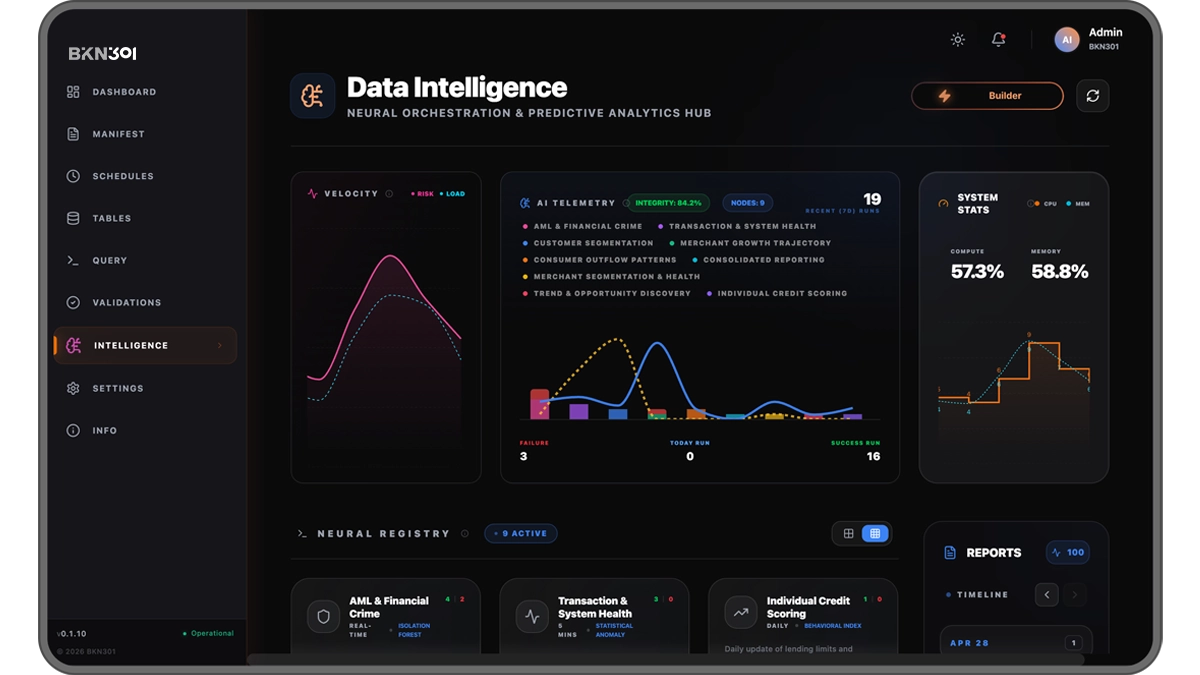
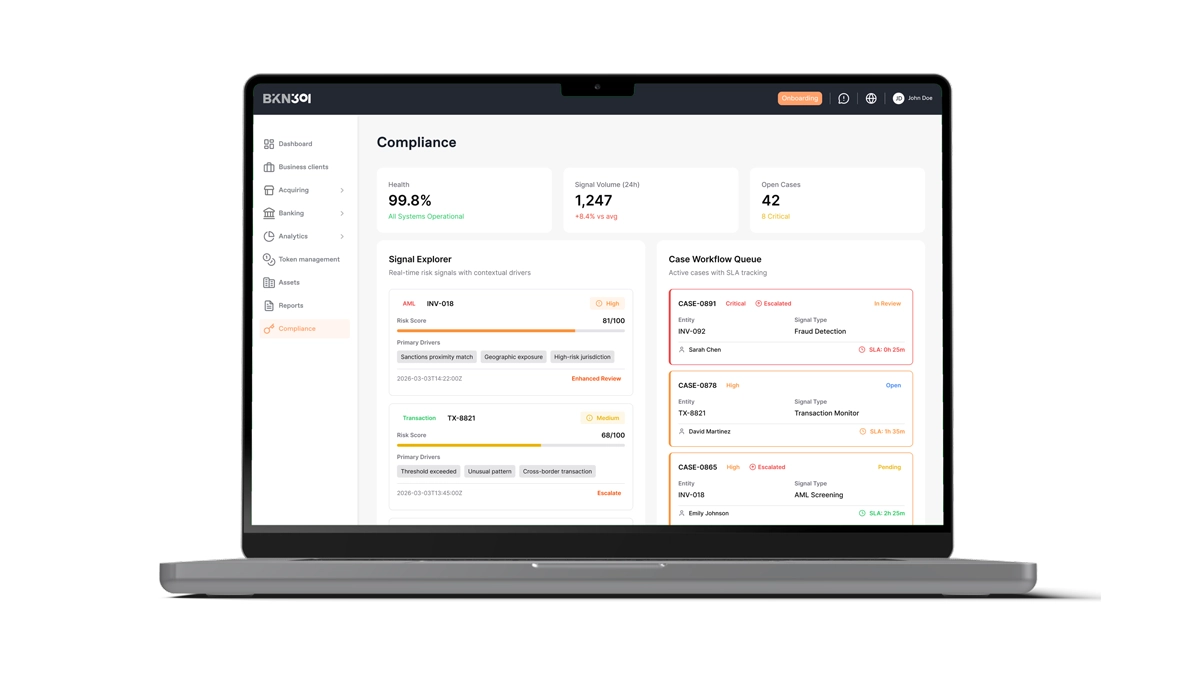
  • AML teams overwhelmed by false positives
  • KYC reviews that ignore customer risk
  • Manual compliance and operational reporting
  • Marketing spend disconnected from results

What BKN301 provides

Risk-based KYC, intelligent AML prioritization, automated reporting, and performance-driven targeting that help teams focus effort where it delivers the greatest business and compliance impact.

Business outcome

  • More focus on the cases that require attention
  • Faster onboarding and review processes
  • Reduced manual reporting effort
  • Greater control over compliance and operational performance

Situations we see most often

  • Fraud and risk signals spread across cards, transfers, wallets, and acquiring
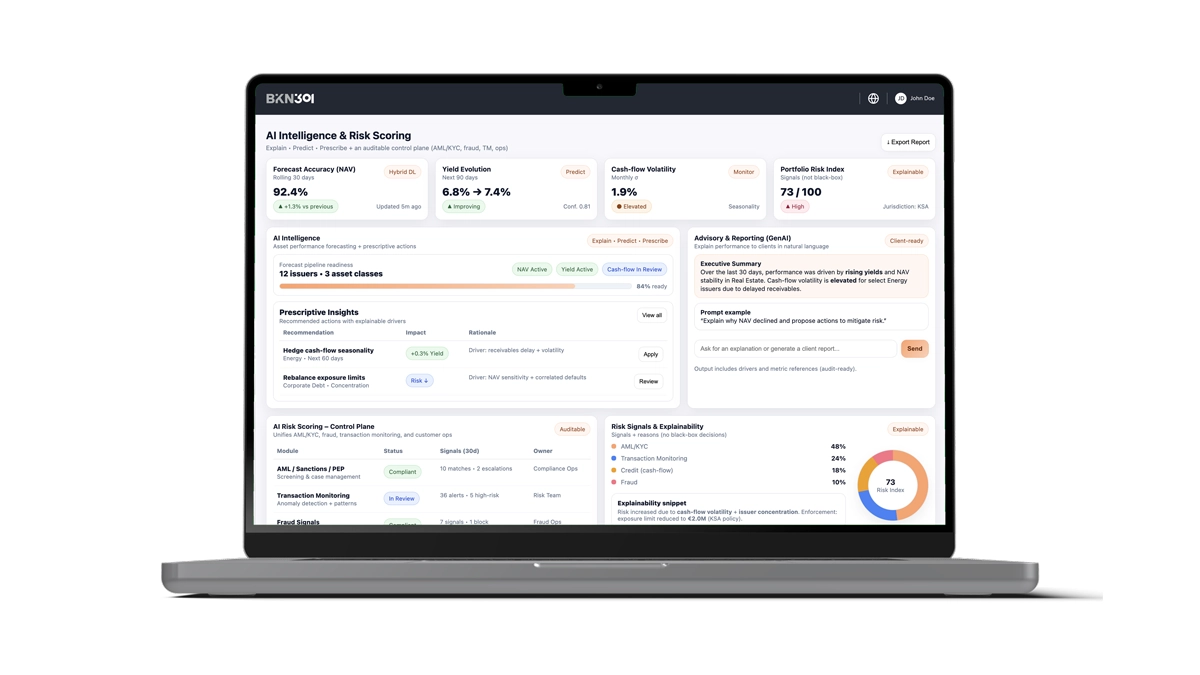
  • Risk and fraud models drift before issues become visible
  • Periodic Customer Due Diligence (CDD) reviews miss material changes in customer risk
  • Decisions are difficult to explain across systems, policies, and teams

What BKN301 provides

A unified risk intelligence layer that continuously monitors customer activity, surfaces emerging risks, and maintains a complete audit trail.

Business outcome

  • Earlier detection of emerging risks
  • Continuous visibility across customer risk profiles
  • Fewer avoidable losses

see risk before it sees you

fully auditable and explainable decisions

banking that builds trust

less friction at every step

Situations we see most often

  • Customers see transactions but not the context behind them
  • Generic notifications generate little engagement
  • Security checks create friction without explanation
  • Customers struggle to find the information they need

What BKN301 provides

A contextual engagement layer that combines transaction intelligence, customer behavior, and natural-language interactions to make banking more relevant and useful.

Business outcome

  • Higher customer engagement
  • Reduced friction across customer journeys
  • Increased adoption of digital services