

A note from Mahesh Paolini-Subramanya, CTO of BKN301.
Banking has always evolved by adding new capabilities. Today, the challenge is different. The industry is learning to separate them.
Stablecoins separate money from traditional payment rails. Tokenisation separates assets from the infrastructure that has historically managed them. AI separates intelligence from individual banking applications. Embedded finance separates banking services from the bank itself.
These shifts may seem unrelated, but they all point to the same architectural reality: innovation is becoming easier when data is no longer tied to a single system or application.
This is why Data Decoupling has become more than a technical concept. It is an architectural approach that gives financial institutions the flexibility to evolve without continuously rebuilding their foundations.
This edition of Pulse of Fintech explores how that shift is already taking place across the industry, and why architecture is becoming one of the most important strategic decisions a bank can make.
1. Money is separating from the rails that carry it
For many years the form of money and the infrastructure used to move it went hand in hand. Deposits kept by commercial banks moved via banking networks. Central bank money was settled using central bank systems and card payments were made possible by card networks. Cross-border transfers also relied on correspondent banking.
Stablecoins challenged that model by allowing fiat-backed value to move on blockchain networks operating 24/7.
The banks are at present setting up their own responses.
It is reported that JPMorgan Chase, Bank of America, Citigroup and Wells Fargo are proceeding via The Clearing House with a joint tokenised-deposit network, the aim of which is to serve corporate treasury, liquidity management and cross-border payments, with a launch being considered for the first half of 2027.
Although they are frequently grouped together, stablecoins and tokenised deposits have different purposes.
- Stablecoins are generally liabilities of private issuers.
- Tokenised deposits remain commercial-bank deposits represented on programmable infrastructure.
- Both point to a future where money moves across multiple settlement rails.
The importance of that change goes beyond the choice of terminology.
A company’s treasury could soon incorporate ordinary deposits, tokenised deposits, stablecoins and central bank money all within the same operational system, and banks will continue to be in charge of liquidity, compliance, reconciliation and reporting for each of the respective systems.
The challenge is consistency.
Each new rail will result in another copy of the customer, account and transaction data. If there is no common foundation, innovation soon turns into operational complexity.
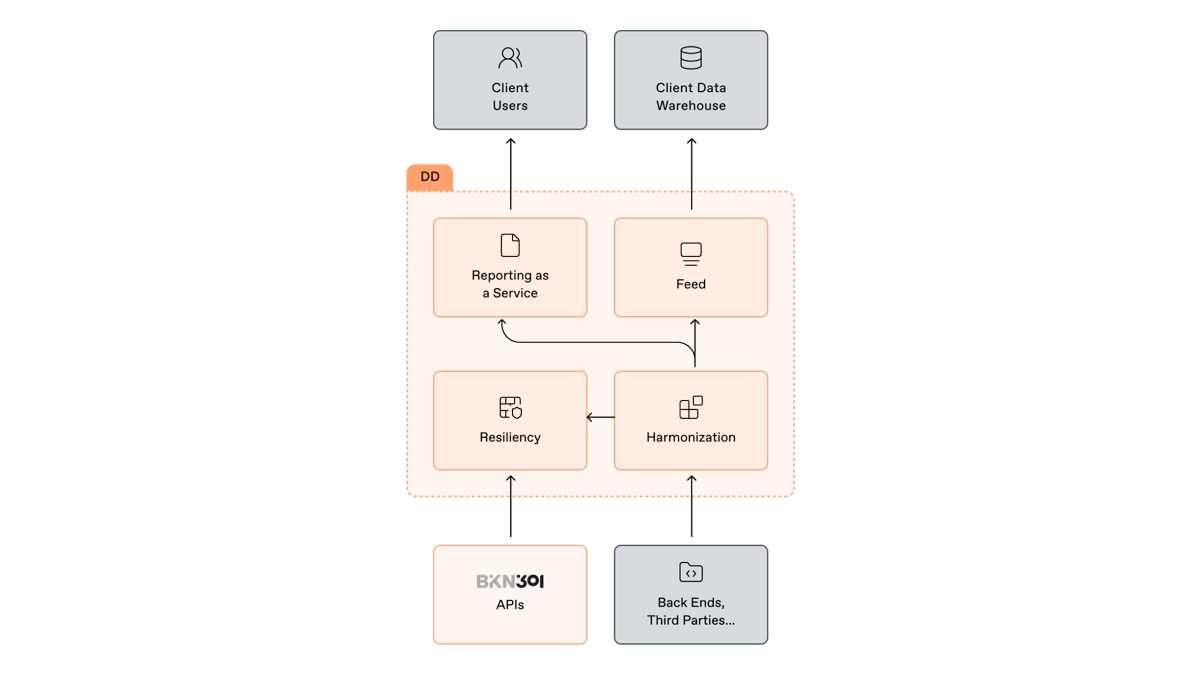
The equation changes when the data layer is decoupled. Once the data relating to customers, accounts and transactions is standardised it is then shared among various services under common governance, the core ledger remaining the system of record.
What really matters about tokenised deposits isn’t blockchain adoption but whether or not banks will be able to handle various types of money without having to rebuild their entire system each time a new settlement route appears.
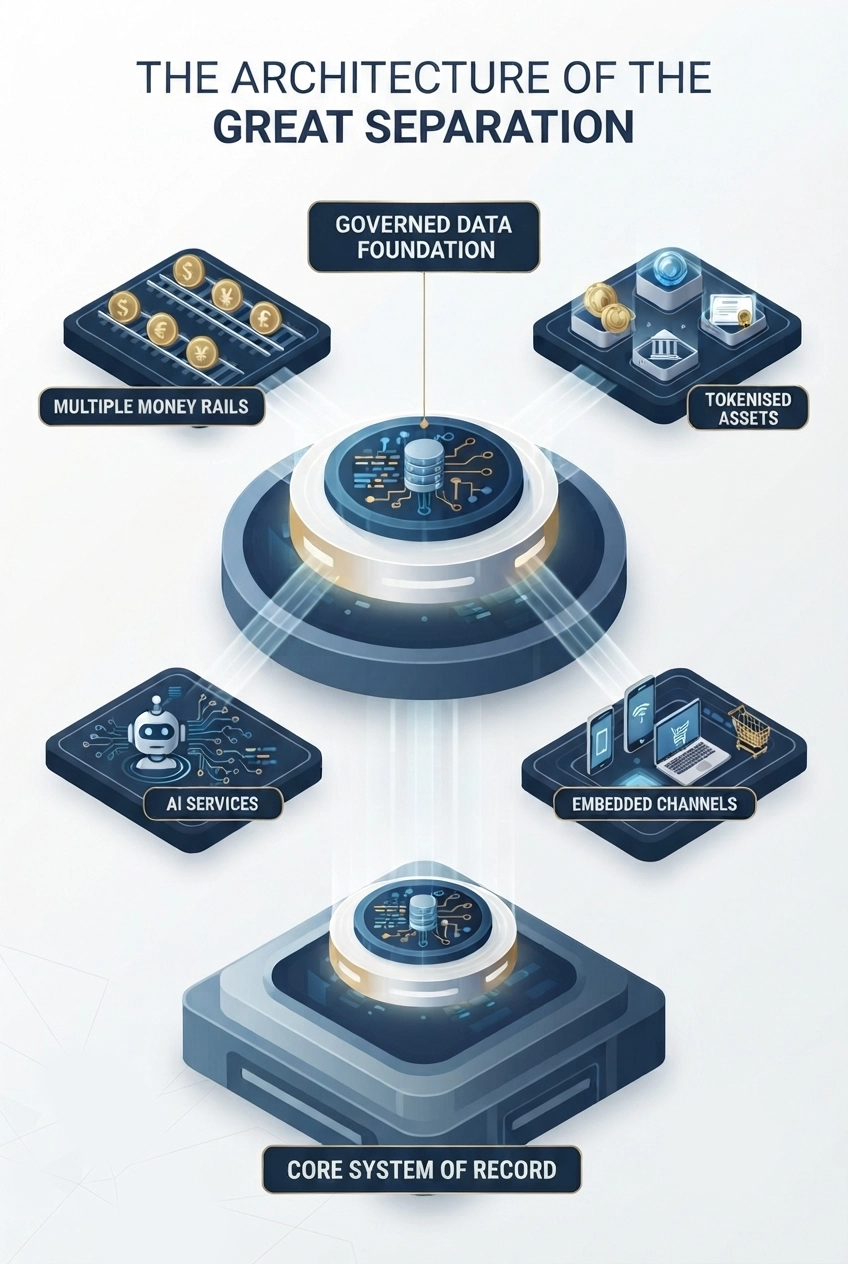
As financial services expand across new rails, assets, AI services and distribution channels, a governed data foundation keeps information consistent.
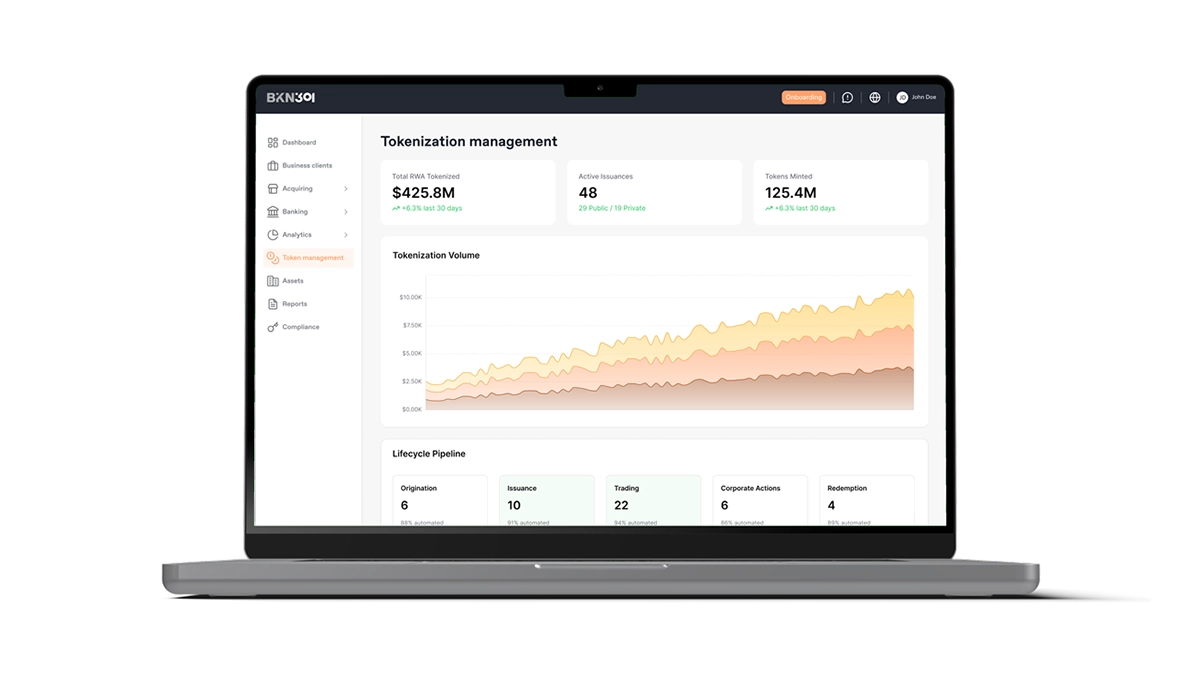
2. What’s holding tokenised assets back?
Tokenisation is often described as converting an asset into a digital token. The technology is relatively straightforward. The operational model is not.
Ownership records, collateral, reporting and settlement still need to work across both traditional and digital infrastructure.
Europe is moving from experimentation to execution. The Eurosystem’s Appia initiative and Pontes roadmap signal that tokenised markets are becoming operational.
The challenge is no longer creating digital assets.
It is integrating them.
A tokenised bond may still need to reconcile with accounting systems, risk engines and regulatory reporting. Each new platform introduces different data models and settlement logic.
A governed data foundation helps institutions:
- maintain one consistent view of every asset;
- connect multiple tokenisation networks without redesigning existing systems;
- evolve as market infrastructure changes.
The real obstacle to tokenisation is not issuing digital assets.
It is keeping the data around them consistent, wherever those assets move.
3. Can AI transform banking if it only understands fragments of the business?
For many years AI in the banking industry was contained within separate systems, each one dealing with its own area such as fraud detection, credit scoring and AML.
That model is changing.
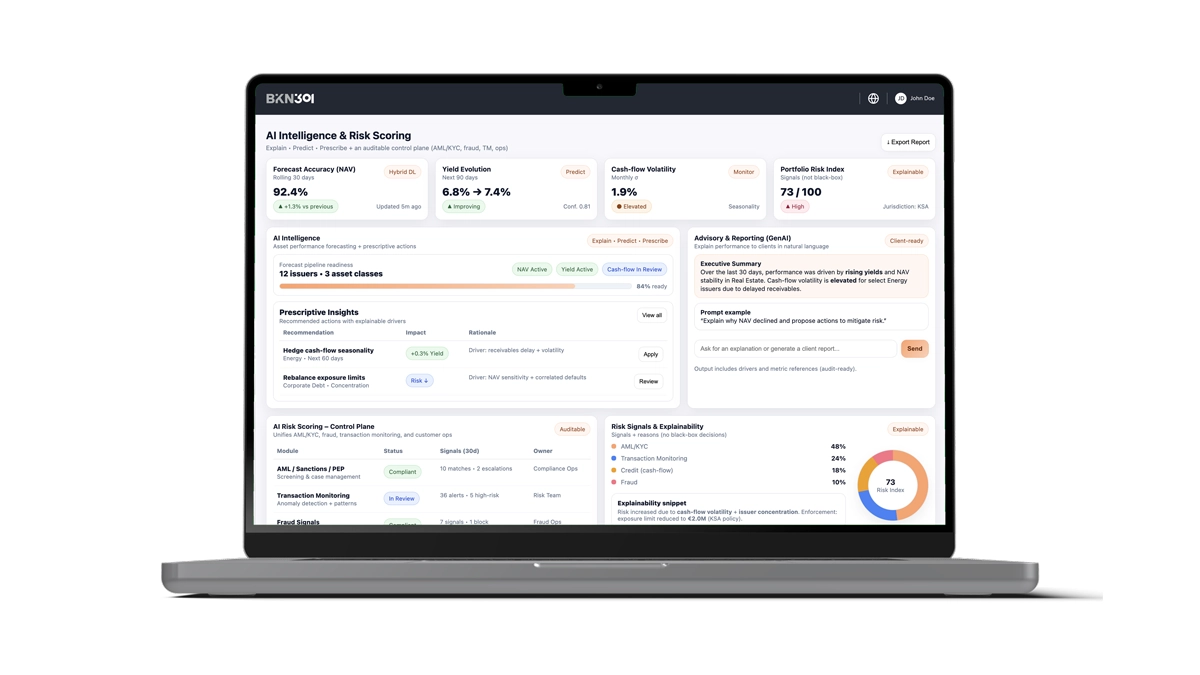
Currently, banks would like artificial intelligence to operate throughout the organisation and to link together the information rather than analyse separate datasets.
The £13 billion transformation plan recently announced by Lloyds Banking Group shows this trend, with AI no longer being seen as a feature but rather becoming part of the bank’s operating layer.
This change brings with it a new challenge.
An AI assistant may need:
- customer profiles
- account activity
- documents
- previous interactions
- product holdings
- internal policies
The model is usually not the limiting factor. The context is.
If customer and transaction data are scattered among various systems, then AI ends up with an incomplete view of the situation. Each different application gives a different interpretation of the same customer, which in turn reduces reliability.
A governed data layer offers a common base. Instead of reconstructing the context each time, AI services use consistent and validated information.
The outcome is not just better AI.
It is the artificial intelligence that can operate safely throughout the bank.
4. Customers increasingly discover banking outside the bank
Financial products now appear inside:
- accounting platforms
- marketplaces
- ecommerce checkouts
- enterprise software
- digital ecosystems
The bank continues to offer the regulated service.
The interface is belonged to somebody else.
That alters the technology model.
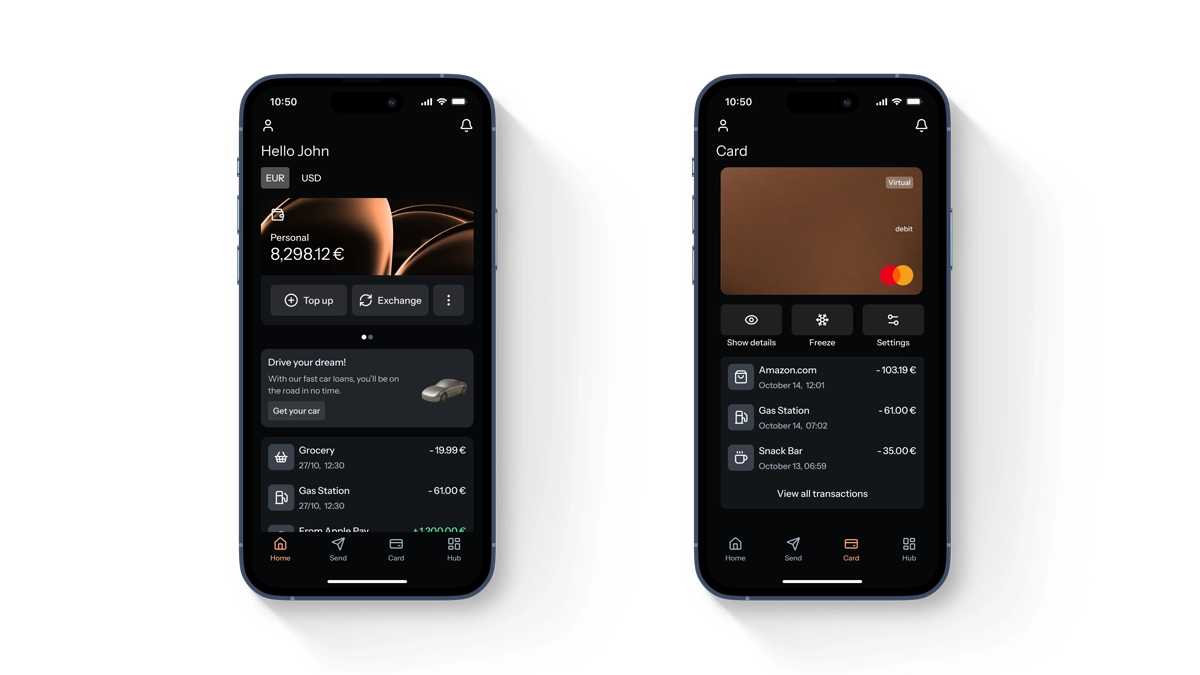
Partners want APIs, up-to-date information and a reliable service; they shouldn’t have to understand the complexity of the systems underlying them.
The addition of each new distribution partner results in another integration challenge.
If there is no common architecture then each connection has to be a custom project.
The equation changes when the data layer is decoupled since the customer and product information can be used across different channels while the core still remains the system of record.
The key issue now is not how many products a bank is able to develop.
The number of ecosystems that the products can reach without having to increase operational complexity.
Why are banks decoupling their architecture?
The banking core remains essential. It records balances, processes transactions and acts as the institution’s system of record.
Over time, however, it has become responsible for far more than that. New channels, reporting, customer services and digital products all connect directly to the core, making every change more complex than it needs to be.
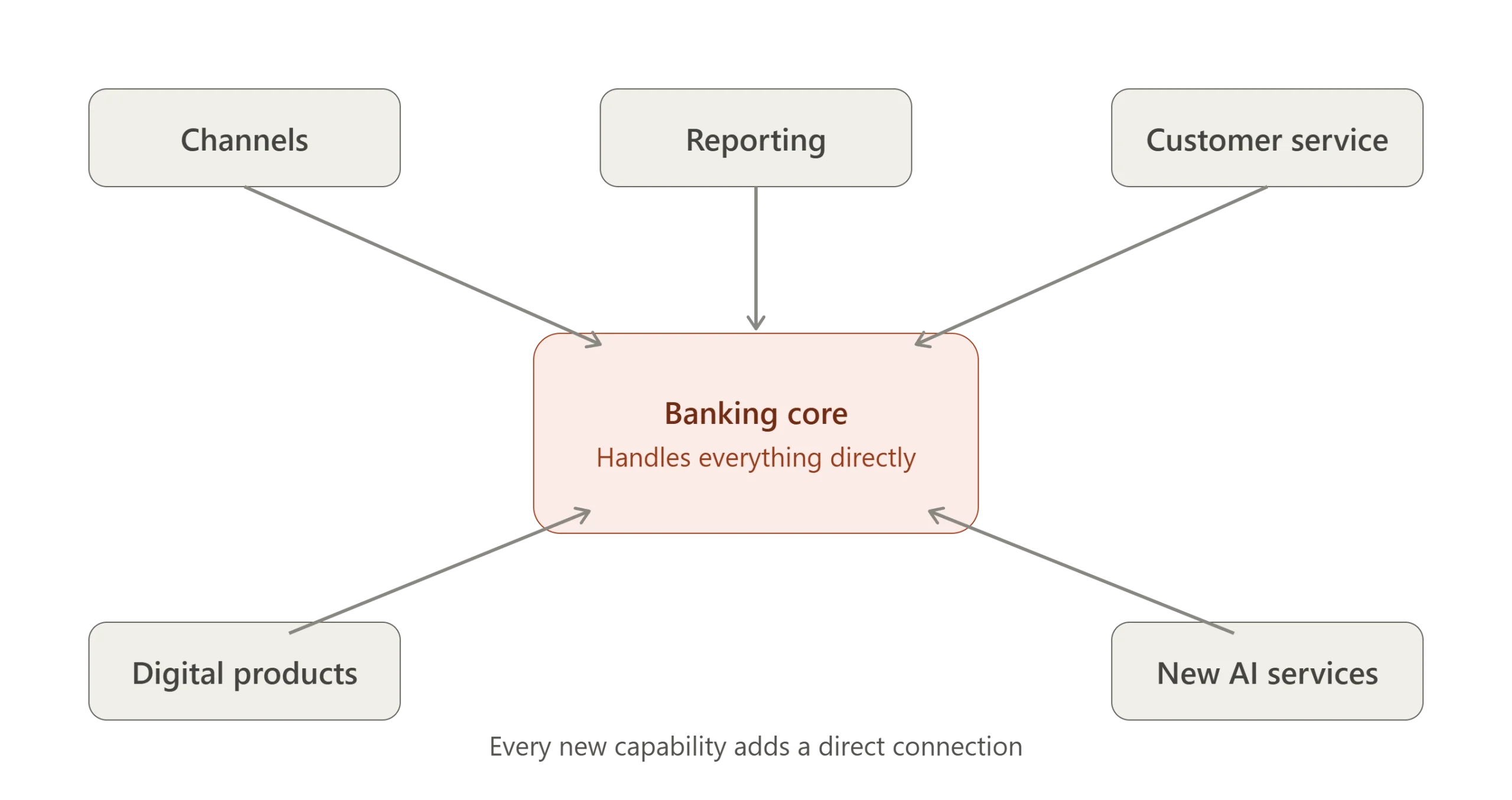
This is the architectural expression of the Great Separation.
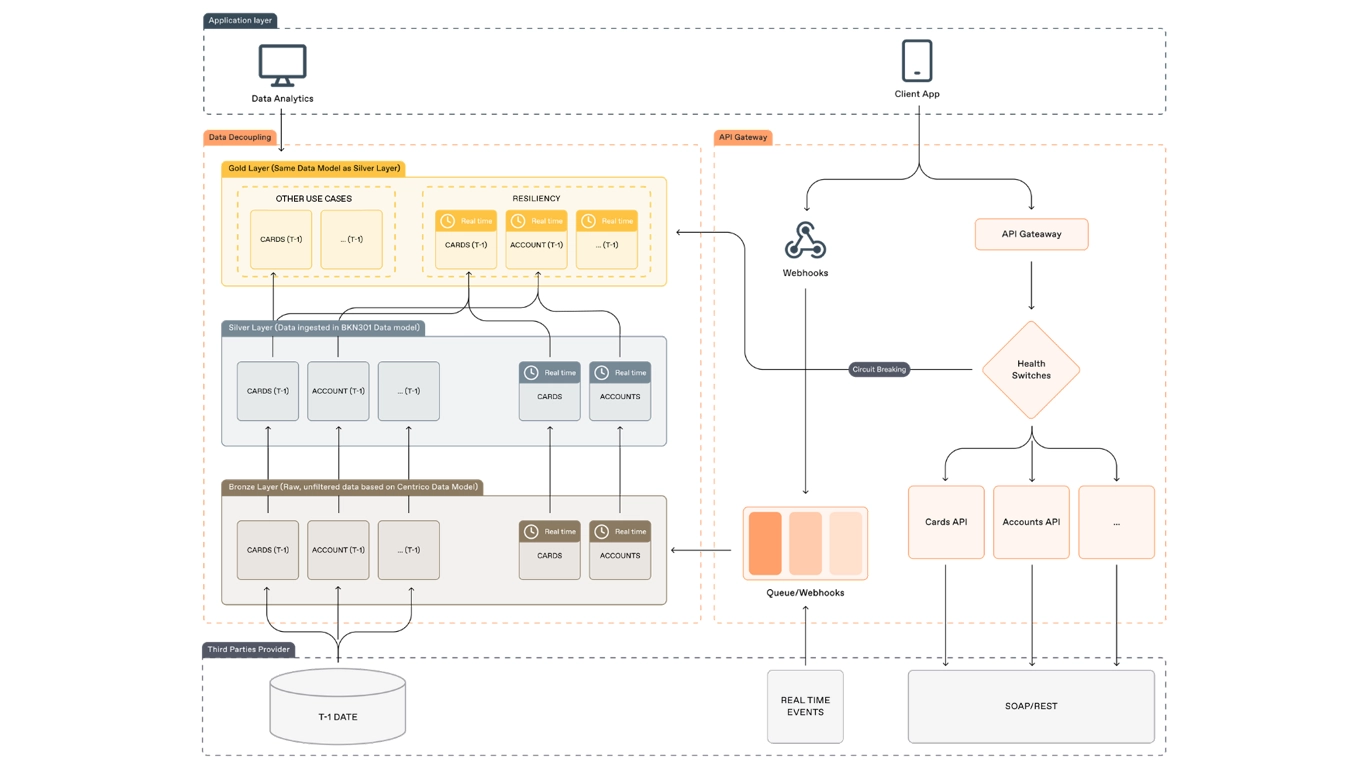
Rather than asking the core to support every new capability, banks are separating transaction processing from data, services and innovation.
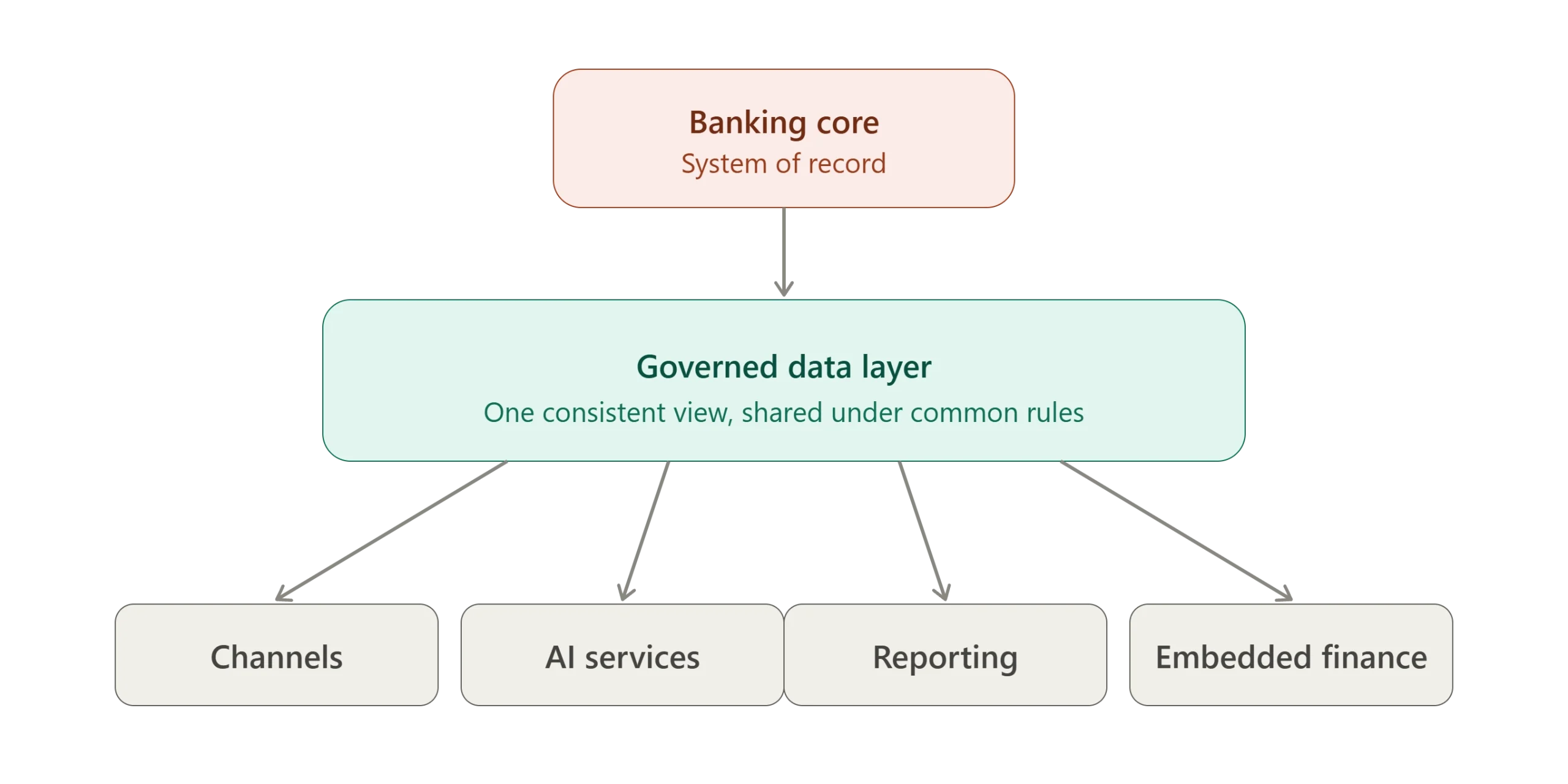
A modern architecture typically combines:
- the core as the system of record;
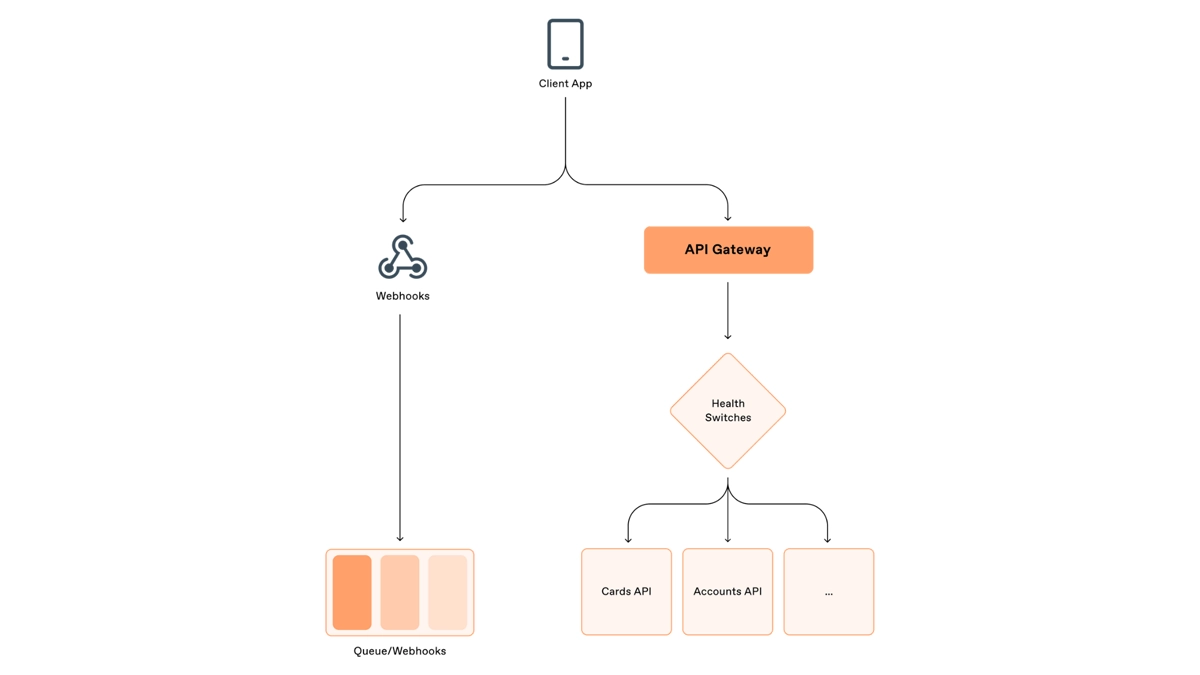
- an API layer to expose banking services;
- a governed data layer that provides consistent information for channels, analytics and AI.
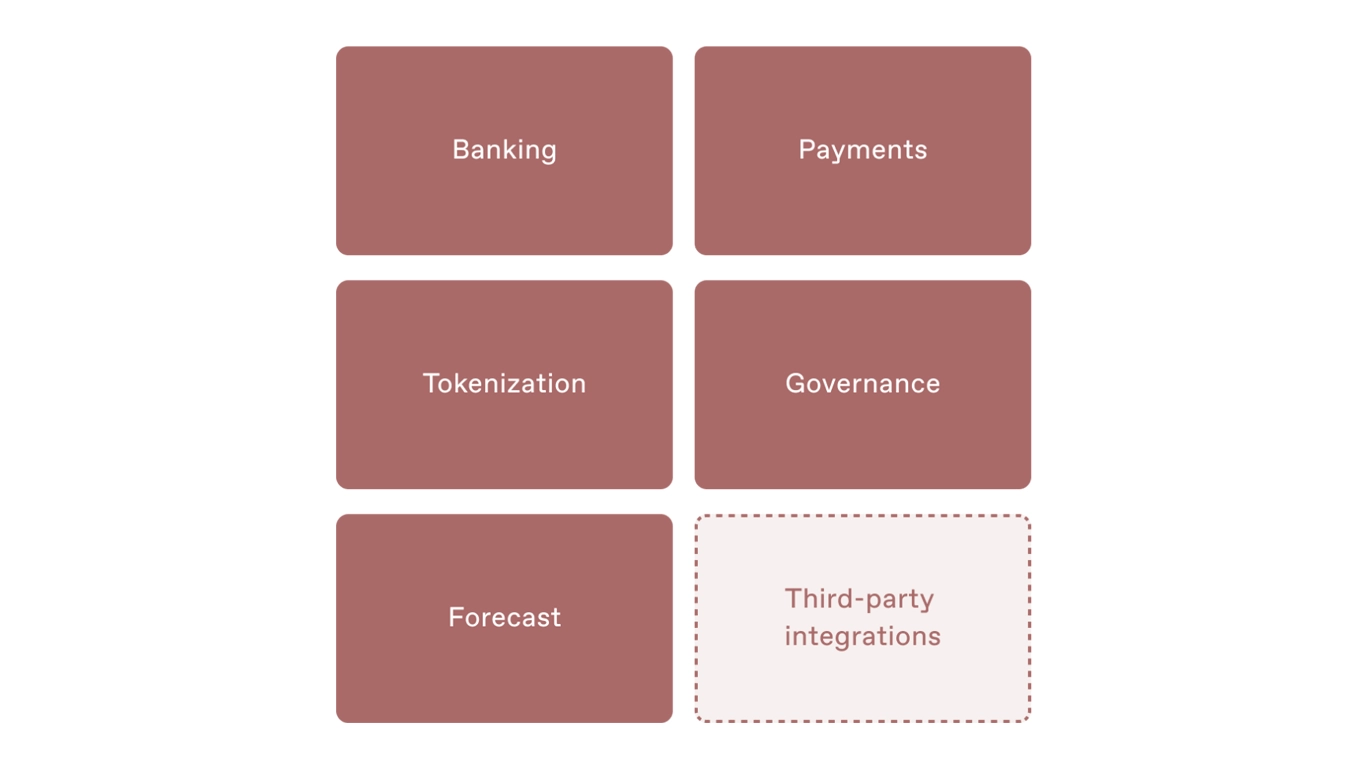
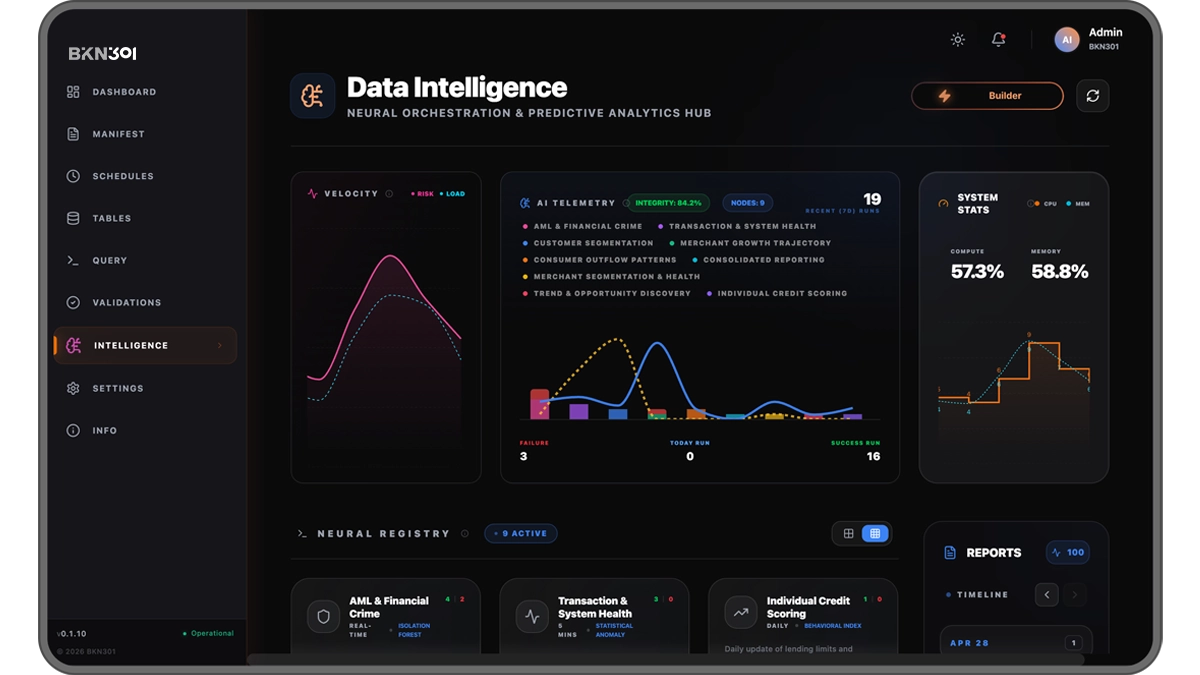
This is the principle behind BKN301’s Composable Ecosystem, where API Gateway, Data Decoupling and Sovereign AI work together while preserving the bank’s existing core.
The benefit is not tied to a single technology. Stablecoins, tokenised assets, embedded finance and AI will continue to evolve. A decoupled architecture allows banks to adopt new capabilities without redesigning the entire technology stack each time.
That is the real meaning of the Great Separation.
Banks are not replacing their cores. They are reducing everything that depends on them.
Sources
- European Central Bank — Appia & Pontes initiative: ecb.europa.eu
- Bank of Italy — Digital Euro pilot participants: bancaditalia.it
- European Commission — Digital Finance Strategy: finance.ec.europa.eu
- Lloyds Banking Group — 2026 Half Year Results & Strategy Update: lloydsbankinggroup.com
This article was originally published in the BKN301’s LinkedIn newsletter, Pulse of Fintech, on 4 August 2026.