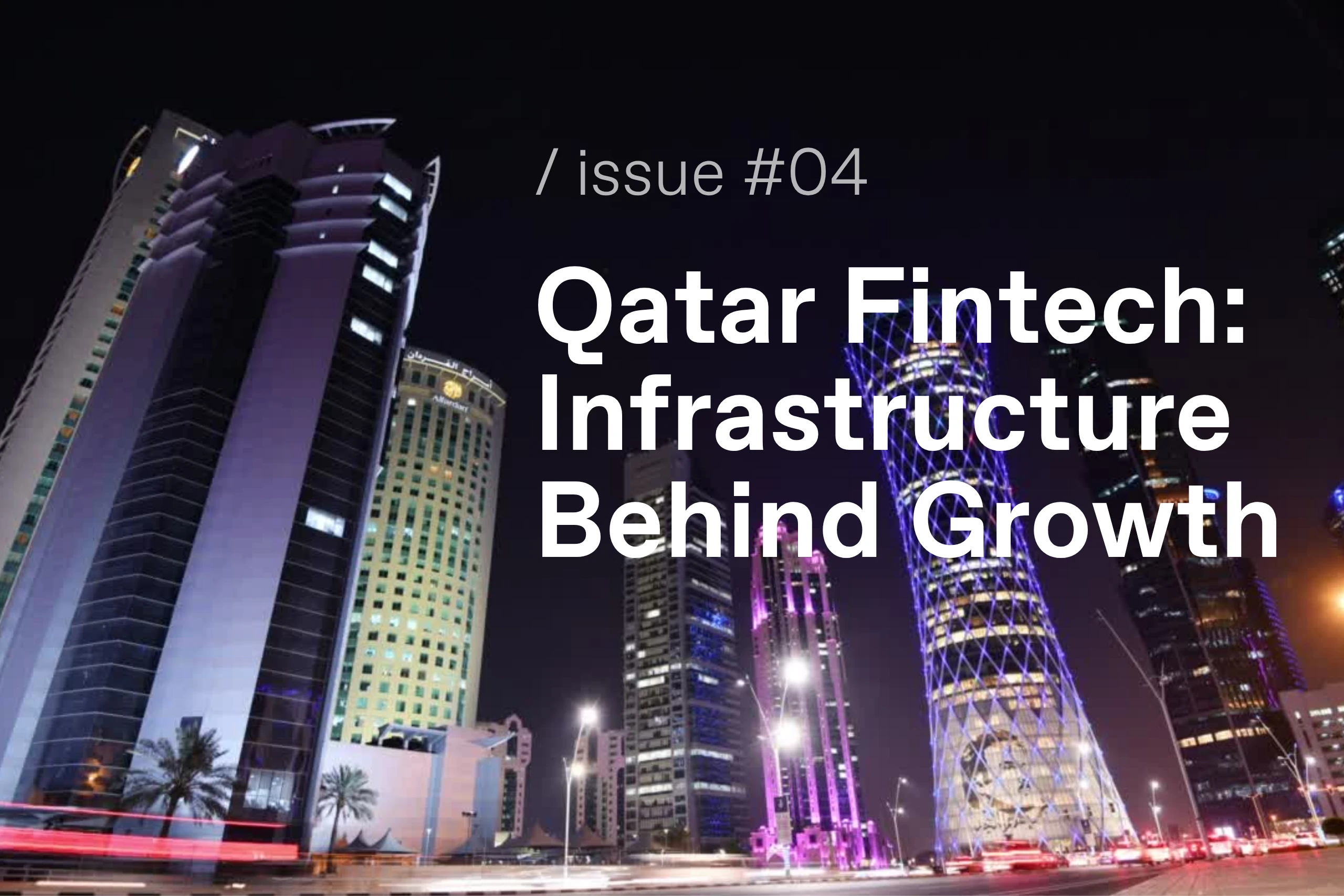

Beneath the growth: what is really powering Qatar’s fintech moment.
Qatar’s fintech market is growing fast. The more important story is the infrastructure underneath it.
When people talk about fintech, they usually talk about apps, wallets and new ways to pay. In Qatar, the more interesting story is less visible. It is the rails, rules and data foundations that decide whether innovation can scale safely. Across payments, banking, AI and digital assets, Qatar is building those foundations with notable intent.
A market moving from early stage to real scale
The headline numbers are strong.
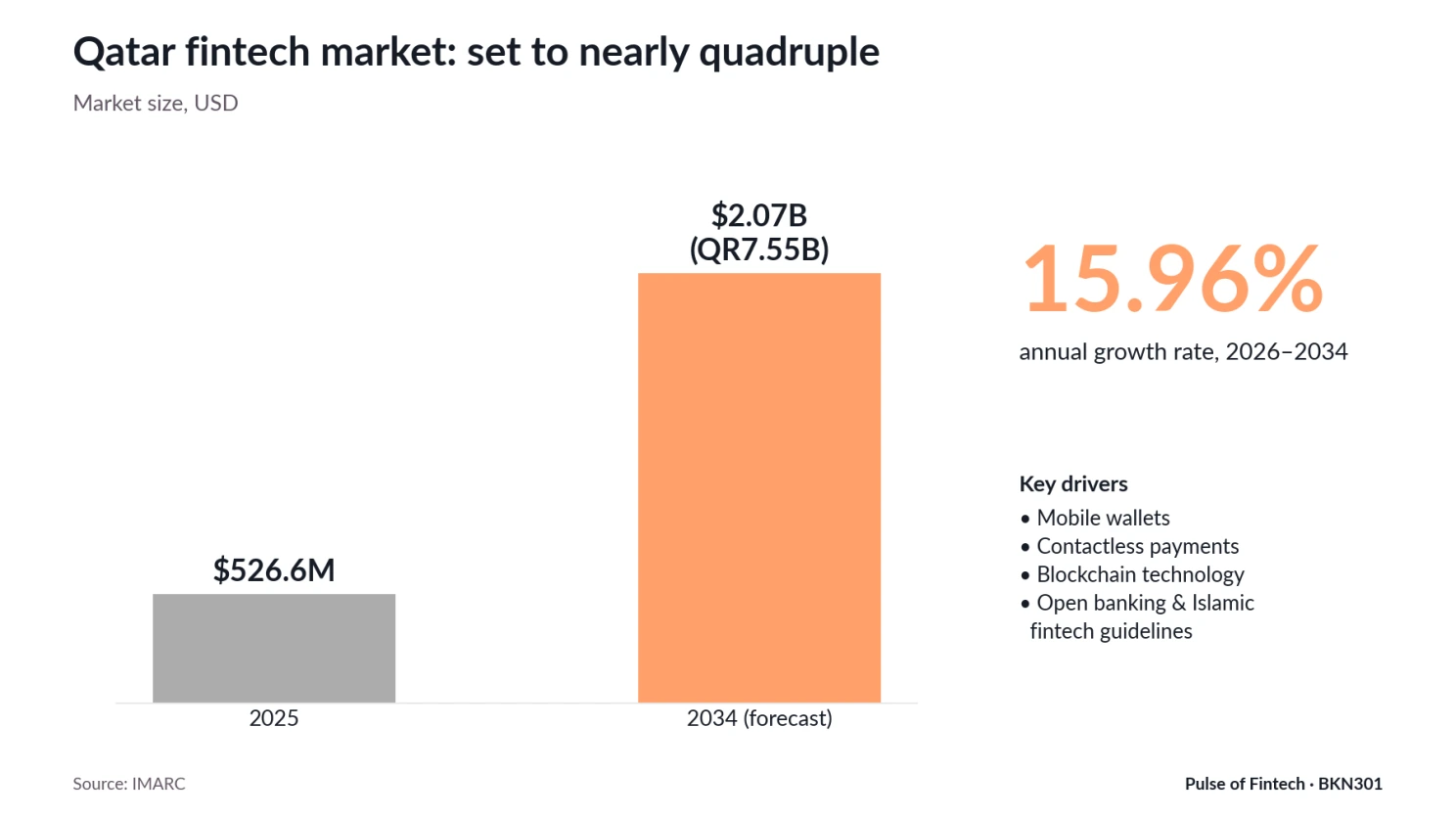
IMARC reports that Qatar’s fintech market is expected to grow to $2.07 billion (QR7.55 billion) by 2034, with an annual growth rate of 15.96% from 2026 to 2034.
Last year, the sector was worth $526.6 million, mainly due to mobile wallets, contactless payment systems, blockchain technology, and clearer guidelines for open banking and Islamic fintech.
That growth sits on a strong digital base. Qatar was the first country to deploy 5G and has recorded 99.7% internet penetration, a world record.
The payment rails are already carrying the load
The clearest evidence of change is in payments data.
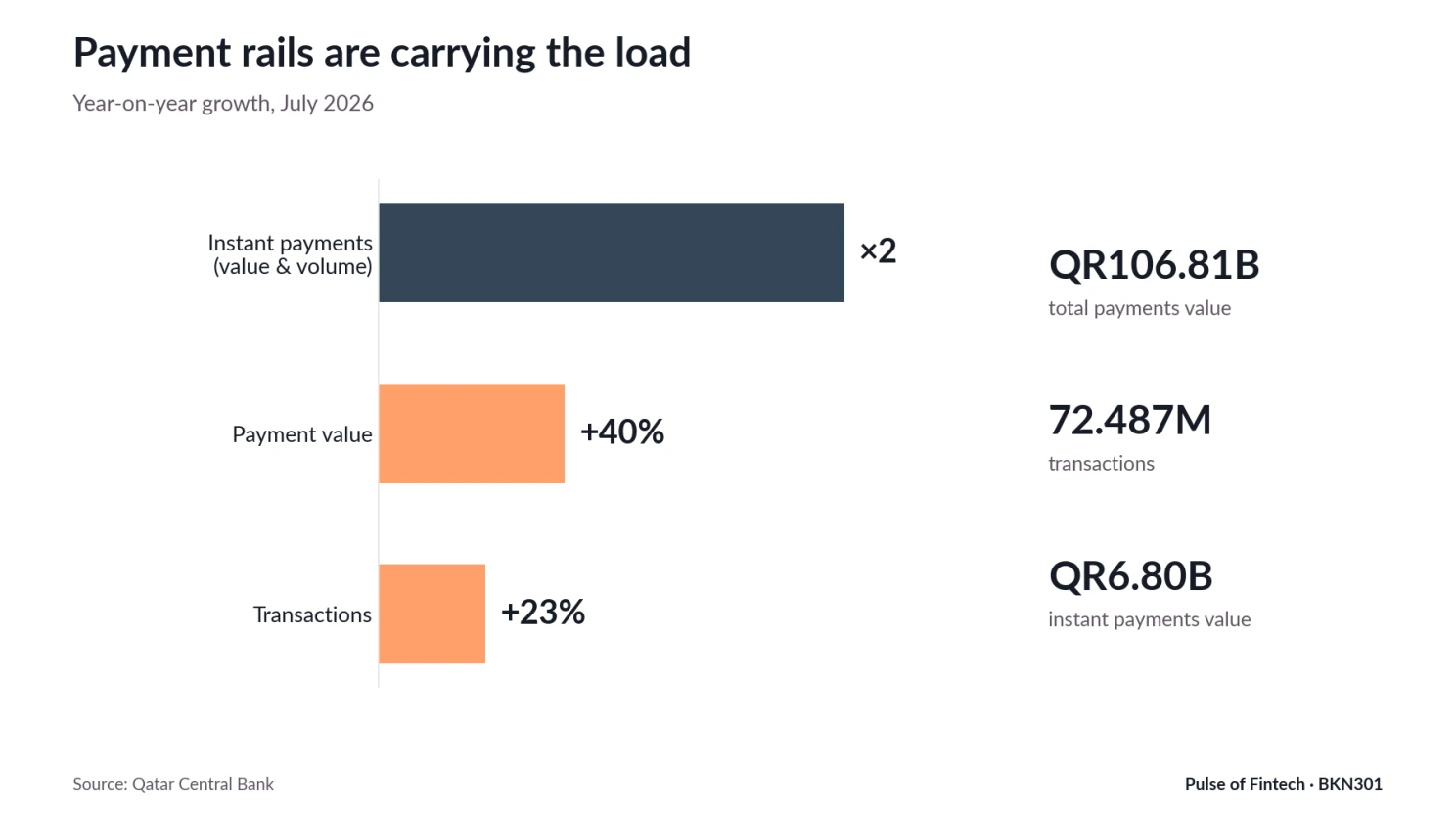
According to figures from the Qatar Central Bank, payments made through the system increased by 40% compared to the previous year, reaching QR106.81 billion in July 2026. At the same time, the number of transactions rose by 23%, totaling 72.487 million.
Instant payments are growing fastest.
The national instant payment network experienced a significant rise, doubling in both value and volume. It reached QR6.80 billion through 3.88 million transactions, with 3.91 million accounts registered.
Registered wallets on the Qatar Mobile Payment platform reached 1.474 million.
The takeaway is that real-time, alias-based, always-on payments are no longer an experiment in Qatar. They are becoming the default expectation.
Banks are strong, but the old growth formula is fading
PwC’s latest report shows a banking sector with solid fundamentals. Total assets of listed national banks grew 7.9% to QAR2.36trn in FY2025, and gross loans and advances grew 10.8% to QAR1.71trn.
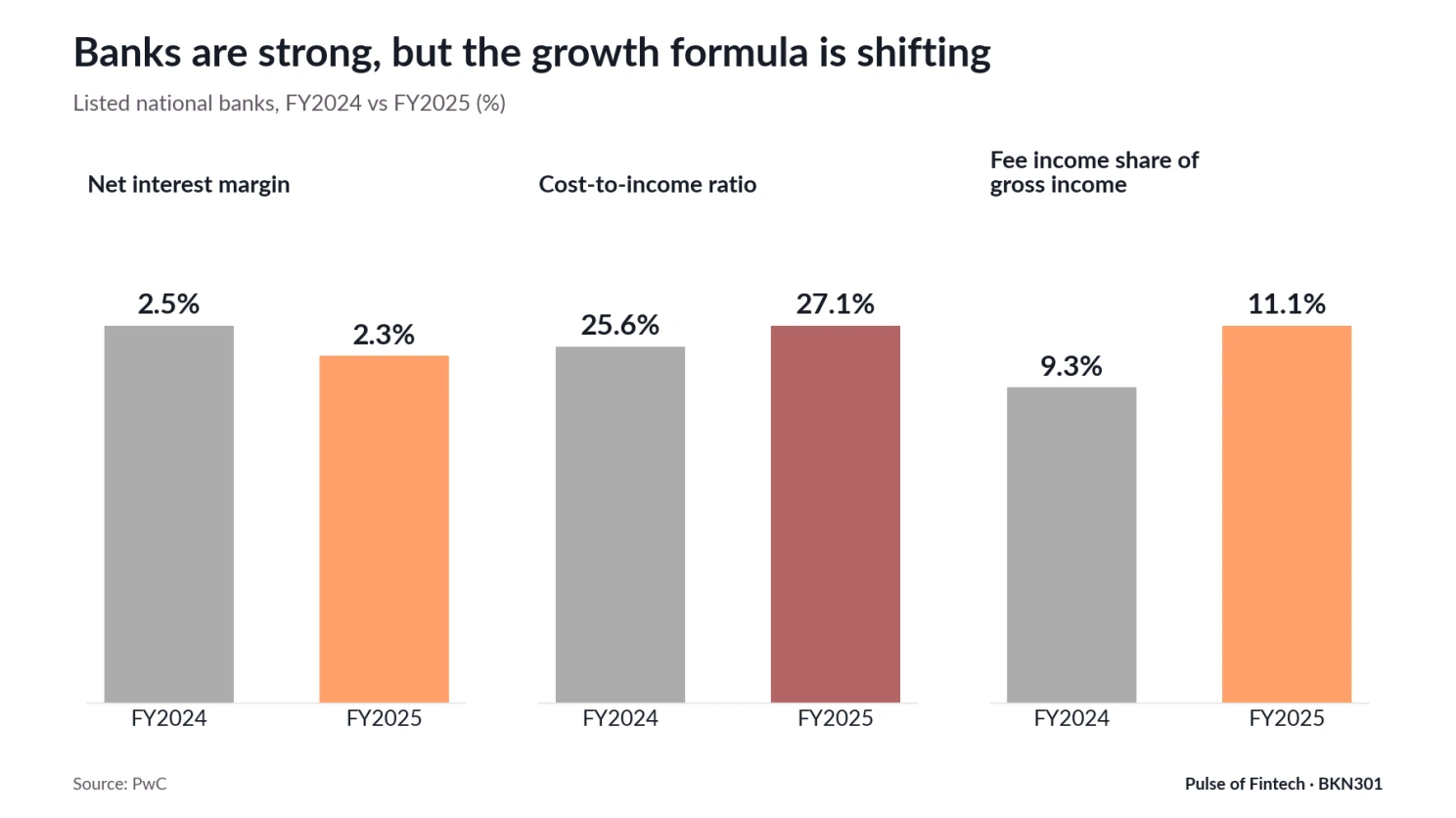
Beneath the growth, however, the economics are shifting. Net interest margin fell to 2.3% in FY2025 from 2.5%, while the cost-to-income ratio rose to 27.1% from 25.6%. PwC argues that profitability is moving away from rate-driven growth toward performance driven by management choices, since banks can no longer rely on asset yields alone to protect earnings.
There are already early signs of how banks are adapting. Fee income rose to 11.1% of gross income in FY2025, up from 9.3%, pointing to a gradual shift toward more diversified revenue.
During a gentle rate cycle, focusing on operational efficiency and developing new digital revenue streams becomes a strategic necessity rather than just an added bonus.
AI: the gap is infrastructure, not ambition
This is where infrastructure matters most.
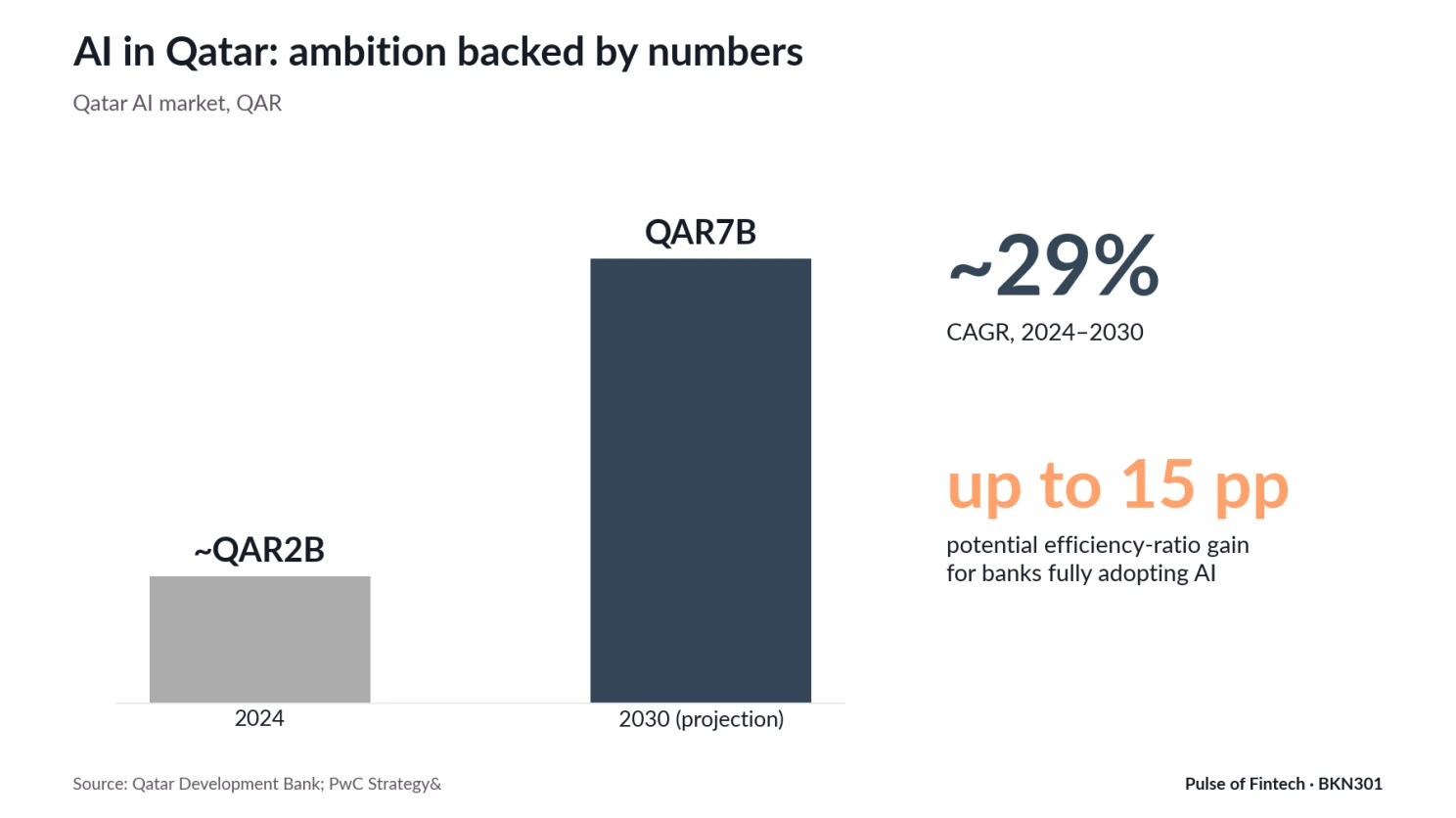
According to PwC Strategy&, banks that completely adopt AI could enhance their efficiency ratio by as much as 15 percentage points.
Locally, Qatar Development Bank projects the country’s AI market will grow from about QAR2bn in 2024 to QAR7bn by 2030, a CAGR of around 29%.
PwC is direct about where the gap lies.
Numerous AI applications within Qatar’s banking industry are still in their initial stages, incorporated into vendor systems, or not publicly disclosed. The primary challenge is moving towards industrialization.
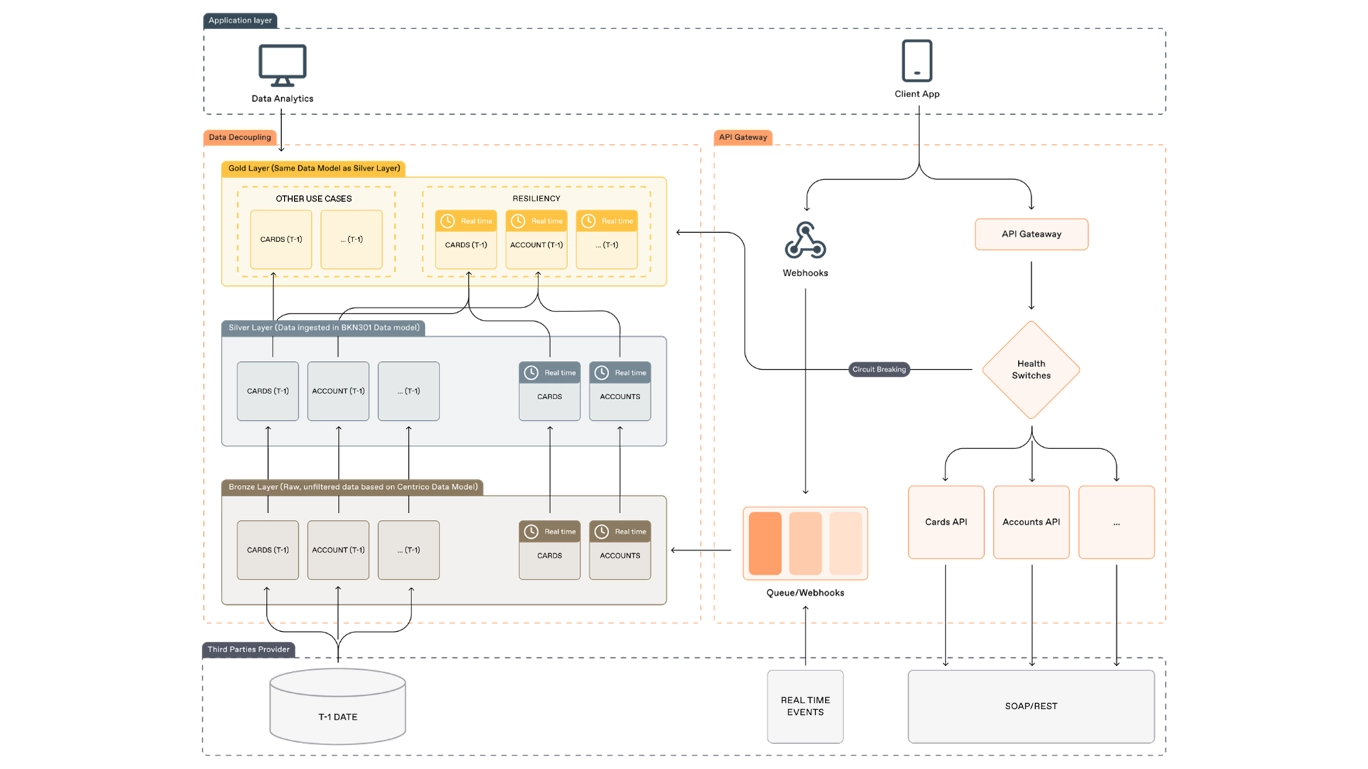
The report also stresses that digital banking, eKYC, cloud, data and API-enabled infrastructure are prerequisites for scalable AI agents. Successful deployment in Qatar also depends on localisation, including bilingual servicing, Islamic finance, SME banking, regulatory expectations, cybersecurity and data residency.
Put simply, AI in regulated finance is only as good as the data and governance beneath it. Institutions that treat AI as an operating model change, rather than a series of pilots, will pull ahead.
Resilience and tokenisation: the next infrastructure layers
Two further themes stand out in PwC’s analysis.
Operational resilience. PwC notes that disruptions increasingly stem from digital incidents, and that regulators see cyber incidents and outages among the fastest-growing risks to financial stability as institutions depend more on third-party providers. As ecosystems become more connected, resilience becomes a design principle, not an afterthought.
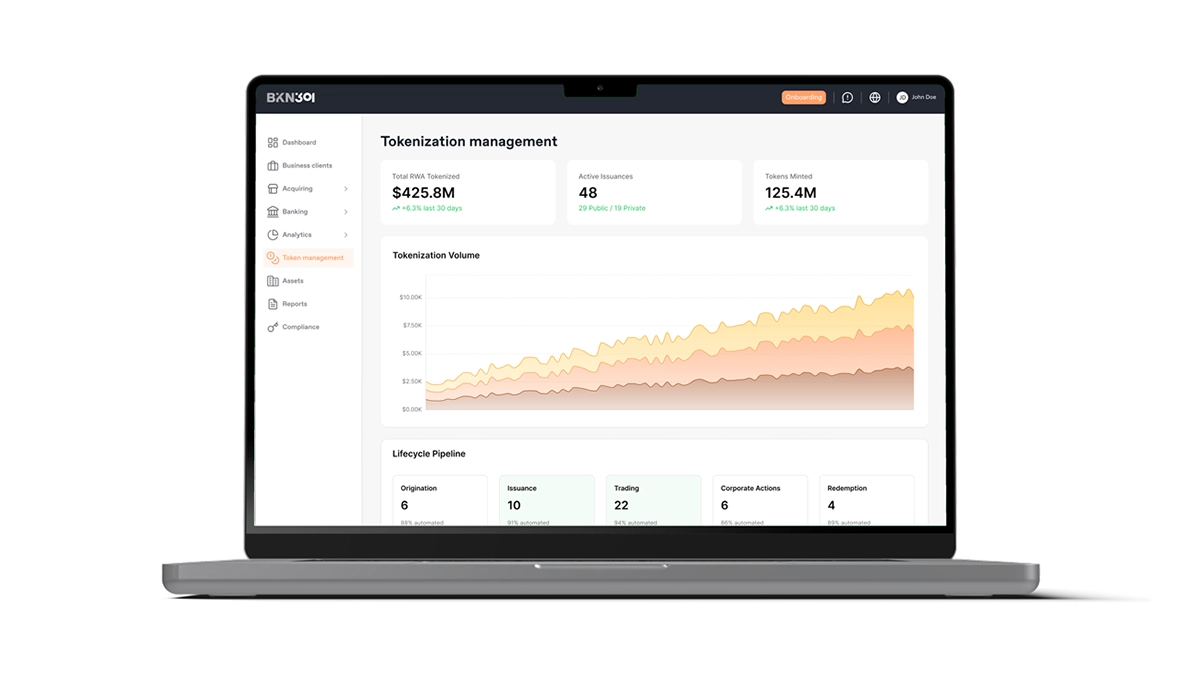
Tokenisation. The Digital Assets Framework launched by the QFC Authority and QFC Regulatory Authority provides the legal foundation for tokenisation, including recognition of property rights in tokens, custody, token transfer and smart contracts. PwC describes Qatar’s approach as focused on asset-backed, rights-based tokenisation of instruments such as shares, debt, sukuk and fund units, positioning it as an extension of capital markets infrastructure.

The regulatory scaffolding is in place
None of this happens by accident. Qatar Central Bank’s FinTech Strategy rests on four pillars, covering foundations and infrastructure, growth drivers, talent, and “FinTouch”, with initiatives such as eKYC, regulatory sandboxes and digital banking frameworks. QCB published its Digital Banks Regulatory Framework in December 2024. The Qatar FinTech Hub, together with the central bank’s sandboxes and streamlined licensing, is lowering barriers for emerging startups.
What this means
Qatar’s fintech story is often told through growth rates. The deeper signal is structural.
The nation is developing instant payment systems, establishing clear guidelines for digital banking, creating a regulated path for tokenized assets, and promoting a national focus on AI.
The next phase will reward institutions that connect these layers well: governed data, interoperable systems, resilient operations and AI that runs inside regulated boundaries. In Qatar, the question is no longer whether financial services will go digital. It is how well the infrastructure beneath them is built.
Read more on Qatar: fintech moves from pilot stage to real infrastructure in Qatar, Qatar’s payments market growth and asset tokenization in Qatar.
Sources
- IMARC Group, Qatar fintech market report
- Qatar Central Bank, payment systems statistics, July 2026
- PwC, Qatar banking sector report, FY2025
- PwC Strategy&, AI in banking
- Qatar Development Bank, Qatar AI market outlook
- QFC Authority and QFC Regulatory Authority, Digital Assets Framework
This article was originally published in BKN301’s LinkedIn newsletter, Pulse of Fintech, on 6 October 2026.